
The Wells Nobody Owns
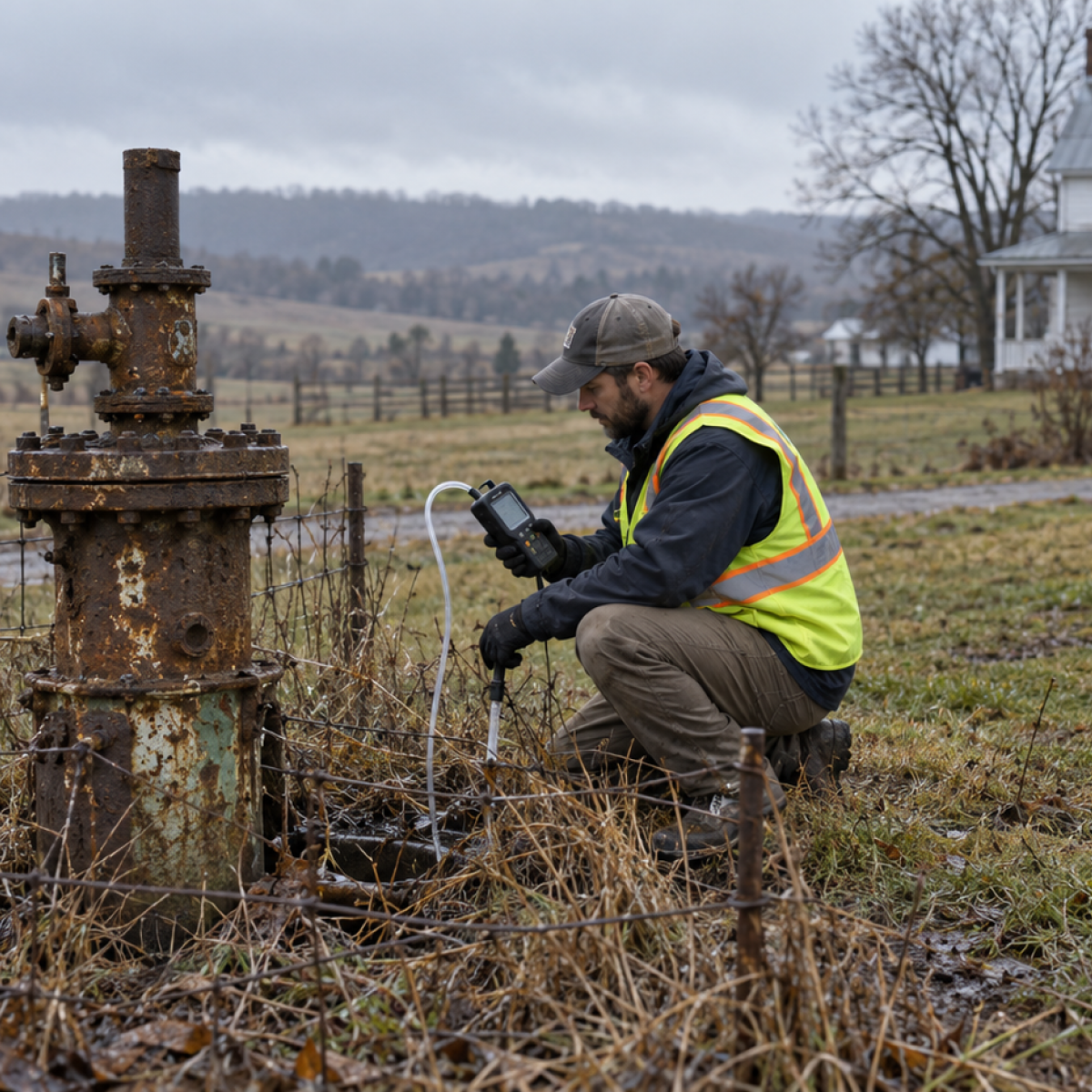
Orphaned oil and gas wells: health risks, liability transfer, and accountability
More than 4 million Americans live within a mile of an orphaned oil or gas well. The companies that drilled many of them are gone, and that isn’t an accident.
What is an orphaned well?
An orphaned well is an oil or gas well that has not been closed or plugged and has no solvent owner. An unplugged and orphaned well becomes an open channel between an oil or gas formation and whatever sits above it. Sometimes that’s a pasture, and sometimes it’s the air around a house or the aquifer a family’s drinking water comes from.
Researchers in 2023 counted more than 81,000 documented orphaned wells across the United States. But state records are incomplete, and the real number is certainly higher.
What’s the problem with an orphaned well?
Orphaned wells can emit benzene, a known human carcinogen, into the air at concentrations as high as 250 parts per million. Unplugged and orphaned wells may also emit methane, which is a potent greenhouse gas and an explosion hazard. And they often release other volatile organic compounds that feed ground-level ozone and pose health risks to people nearby. As an orphaned well sits there, the casing corrodes, and these air pollutants take the shortest route to the surface.
Then there’s the threat of water pollution. Orphaned wells can contaminate water supplies when toxic brines, heavy metals, and other pollutants seep or leak into an aquifer. More than a third of documented orphaned wells sit within about two-thirds of a mile of a domestic groundwater well that provides drinking water.
How the cleanup obligation “disappears”
The obligation to plug an oil and gas well when it’s done producing doesn’t vanish on its own. It gets moved.
A well produces oil and gas for a while, and then the output declines. An increasingly common scheme is for an original operator to sell the well to a smaller company as it gets less profitable. That company later sells to a smaller one. Each transfer pushes thousands of low-value wells further down the chain, and at the end of it sits an operator holding a plugging liability that exceeds everything it owns, maybe backed by a bond covering at best a fraction of the remediation cost. Then it files for bankruptcy. The wells become the state’s problem.
Some parties have filed lawsuits over orphaned wells and have alleged in complaints that all of this is by design, and that some oil and gas companies follow a playbook: squeeze the last bit of profit out of dead and dying wells, then leave the cleanup costs to someone else.
Where accountability could come from
Plaintiffs are testing a couple of routes to hold these operators accountable.
The first is pushing the cost back up the chain. Plaintiffs in one case have argued that transfers structured to shed plugging obligations can be challenged, and that a landowner left with an unplugged well contaminating their property can look to prior owners with more resources rather than to the bankrupt company at the end of it.
The second is ordinary tort law. Some homeowners have filed common law nuisance, trespass, and negligence claims over unplugged wells, trying to force cleanup before the wells get handed off to an operator that can’t pay for it. Those claims can also cover the health risks, property damage, and lost property value caused by pollution from unplugged wells.
Talk to us: Whether you have a claim over an abandoned or unplugged oil and gas well depends on the facts. Contact Edelson PC at hello@edelson.com or 844.Edelson.
FAQ
What is an orphaned oil or gas well? An orphaned well is an oil or gas well that has stopped producing and has not been plugged, and the last company responsible for it is gone, usually through bankruptcy. Left open, the well can become a channel between the underground formation and the air, soil, or groundwater above it.
Are orphaned wells dangerous to people living nearby? They can be. Unplugged wells may release benzene, methane, and other volatile organic compounds into the air, and toxic brines and heavy metals can seep into aquifers that supply drinking water. The risk depends on the well’s condition and how close it sits to homes and water sources.
Who is responsible for plugging an orphaned well? Plugging requirements vary by state, but the company operating a well is generally expected to plug it once it stops producing. In practice, low-value wells are often sold down a chain of smaller companies until one goes bankrupt, and the cost falls to the state. Some lawsuits have argued that prior owners who transferred wells to shed that obligation can still be held accountable.